How to Hide Comments on TikTok: Filters, Deleting, and Controls
Learn what hiding comments means on TikTok, how filters and approval work, when to delete or disable comments, and how brands can automate moderation.
Updated August 18, 2026

TikTok does not use one universal Hide comment action for every situation. To keep comments out of public view, creators can filter all comments for approval, filter likely spam or offensive comments, filter specific keywords, turn comments off for a post, or delete an existing comment. The right option depends on whether you want to review comments before publication, remove one comment, or stop new comments entirely.
For a business with frequent comments, those native tools are useful controls but still require someone to review queues and make repeated decisions. The more scalable approach is to automate routine moderation while keeping people responsible for criticism, support issues, and sensitive cases.
Can you hide a single comment on TikTok without deleting it?
Not in the same way Facebook hides a Page comment while leaving it visible to the author and their friends. TikTok's current creator controls focus on filtering before approval, deleting an existing comment, limiting who can comment, or turning comments off for a post.
If a comment has already appeared publicly and you want it removed from the post, TikTok's documented action is deletion. If you want comments held out of public view before they appear, use a comment filter and review the filtered queue.
That distinction matters for searches such as “hide TikTok comments without them knowing.” Filtering can prevent a comment from becoming publicly visible unless you approve it, but do not promise that a commenter can never infer what happened. Platform behavior and interfaces change, and a person may notice that their comment is not visible from another account.
TikTok comment controls at a glance
| Goal | TikTok control | What happens | Best fit |
|---|---|---|---|
| Review every new comment before it appears | Filter all comments | Comments remain hidden unless you approve them | A short-term high-risk post or tightly controlled launch |
| Reduce likely spam or offensive comments | Filter unwanted comments or Creator Care Mode | TikTok holds comments it identifies for review | A general safety layer that still needs review for mistakes |
| Block specific terms | Keyword filters | Matching comments stay hidden unless approved | Known scam phrases, slurs, or campaign-specific risks |
| Remove one existing comment | Delete | The comment is removed from the post | A clear violation that should not remain |
| Stop new comments on one post | Turn off Allow comments | People cannot add new comments to that post | A post that should not accept public discussion |
| Limit the audience allowed to comment | Comment privacy settings | Only the selected account group can comment | Personal or creator privacy—not a substitute for business moderation |
TikTok says the Filter all comments option is not available to everyone. Names and availability can also vary by region, account, age, and app version. Use TikTok's current Manage comments documentation as the source of truth for the controls available to your account.
How to filter comments on TikTok
TikTok's current in-app route is:
- Open Profile.
- Open the Menu.
- Select Settings and privacy.
- Select Privacy, then Comments.
- Choose the filter that matches your goal.
Depending on your account, the available controls can include:
- Filter all comments, which holds comments until you approve them;
- Creator Care Mode, which applies additional filtering to comments TikTok considers inappropriate, offensive, or previously reported or disliked;
- an unwanted-comment filter for likely spam or offensive content; and
- keyword filters for words or phrases you specify.
To review filtered comments, return to the comment settings and open Review filtered comments. TikTok allows the creator to approve or delete comments from that queue.
Filtering every comment gives the most control, but it also creates the most manual work and can delay legitimate questions. Use it selectively rather than treating it as the default for every post.
How to delete one comment—or several
TikTok's comment instructions say you can delete a comment you wrote or a comment on your own post:
- Open the comments on the post.
- Press and hold the comment.
- Select Delete.
For bulk cleanup on your own post, open the comment-management controls, select the comments, then delete them. TikTok currently documents a limit of up to 100 selected comments in one bulk action.
Delete when the content clearly should not remain and you do not need an approval hold. If the comment may violate TikTok's rules, reporting can be appropriate as well. Repeated abuse may justify blocking the account, but that is a broader account-level decision than removing one message.
How to turn comments off on one TikTok post
You can turn comments off while creating a post or change the setting after publication.
For an existing post:
- Open the post from your profile.
- Open More options.
- Select Privacy settings.
- Turn Allow comments off.
Turning comments off prevents new participation for the entire post. It is a blunt control, so use it when the post genuinely should not host comments—not as a shortcut for handling a few difficult messages.
When a brand should filter or remove a TikTok comment
Filtering or removal is usually reasonable for:
- scams, phishing, fake giveaways, or impersonation;
- repeated unsolicited promotion;
- harassment, threats, slurs, or explicit abuse;
- dangerous or sensitive content that requires review;
- known spam patterns covered by the moderation policy; or
- a new high-risk pattern while the team confirms a consistent response.
Do not remove a comment simply because it is negative. A frustrated customer can describe a real product or delivery issue. A polite message can still contain a scam link. Review the behavior, request, account, thread, and risk—not sentiment alone.
When a reply is better than hiding or deleting
Keep the conversation visible when a public answer would help the customer and other viewers. Common examples include:
- product questions;
- sizing, compatibility, or availability questions;
- shipping or return-policy questions that do not require personal details;
- constructive criticism; and
- confusion caused by the post itself.
For order-specific problems, acknowledge the person publicly and continue through an approved private channel. Never ask for an address, payment detail, order number, or other sensitive information in a public TikTok comment.
Why native TikTok moderation becomes difficult at scale
TikTok's controls can hide likely problem comments, but the operating work remains: someone must check the filtered queue, approve false positives, delete real violations, answer buyer questions, and recognize when a case needs support or escalation.
That workload becomes harder when comments arrive across many posts and social channels. Broad keyword rules can catch valid conversations. Delayed review can leave buying questions unanswered. Different team members can apply different standards to similar comments.
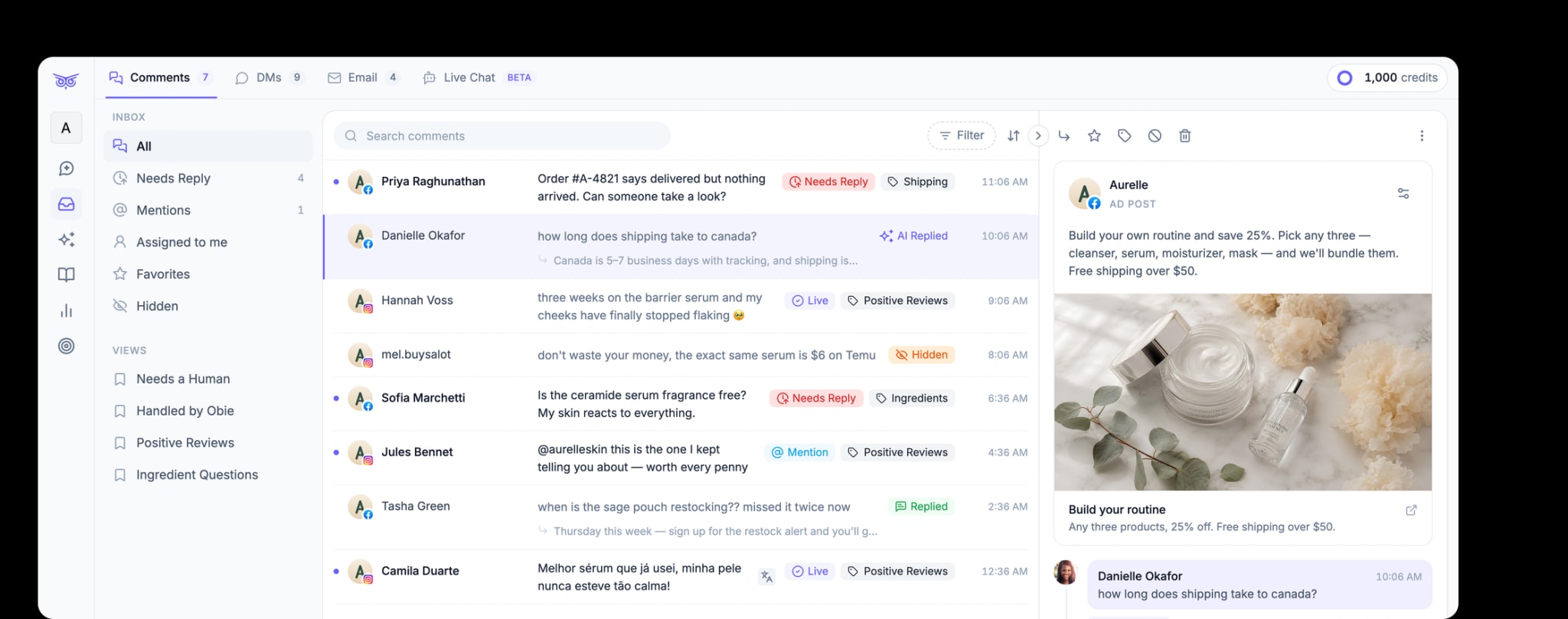
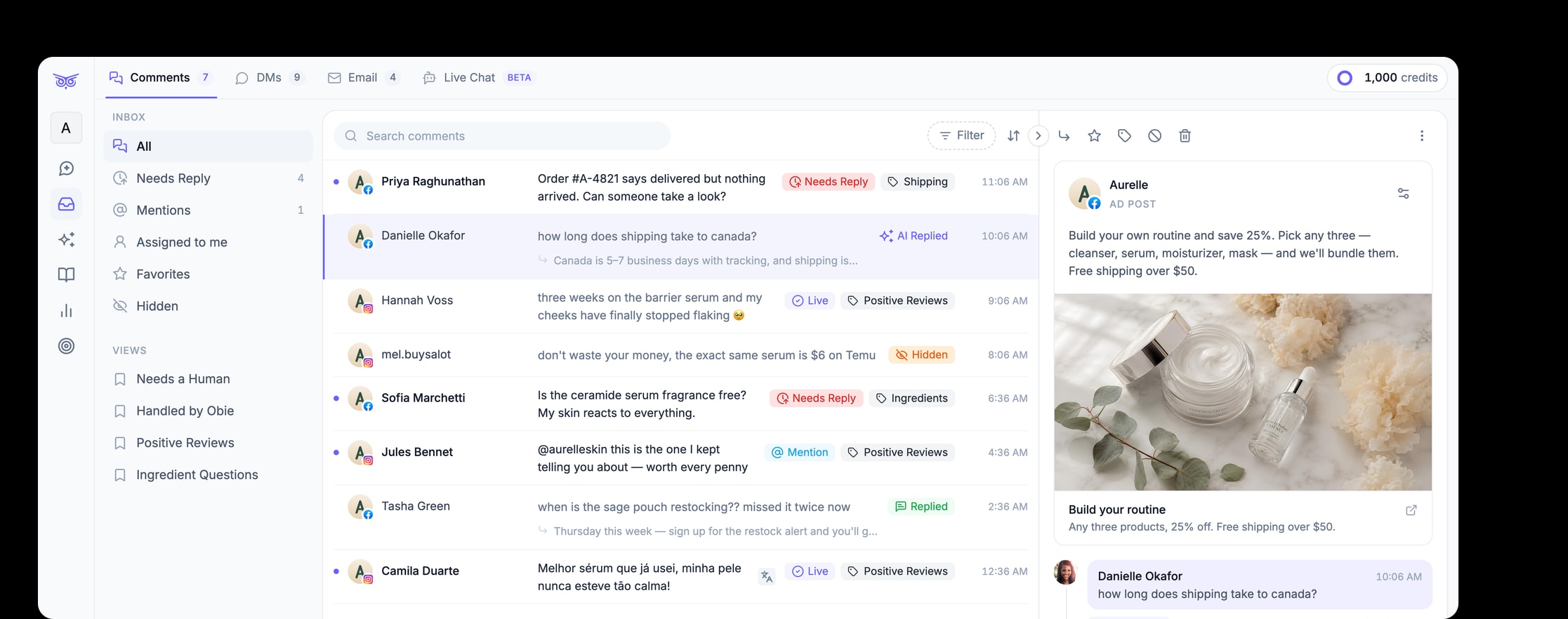
Brandwise social media management gives ecommerce teams a more scalable path across supported social conversations, including TikTok. It helps automate routine moderation and responses using approved brand information, manage customer conversations in one place, and keep people involved when judgment is needed. TikTok's native settings remain useful account controls; Brandwise reduces the repetitive monitoring and decision work around them.
If your team is formalizing its rules, start with the social media comment moderation guide. Define what counts as spam or harm, which questions should receive an answer, which cases move private, and which situations always require a person.
The practical answer is: use TikTok filters when you want comments held for approval, delete a comment that should be removed, and turn comments off only when the whole post should stop accepting them. For ongoing brand moderation, automate the routine decisions instead of making someone work through every comment manually.